Gravira
Spin the world, drop the blocks, clear the rings.
What it is.
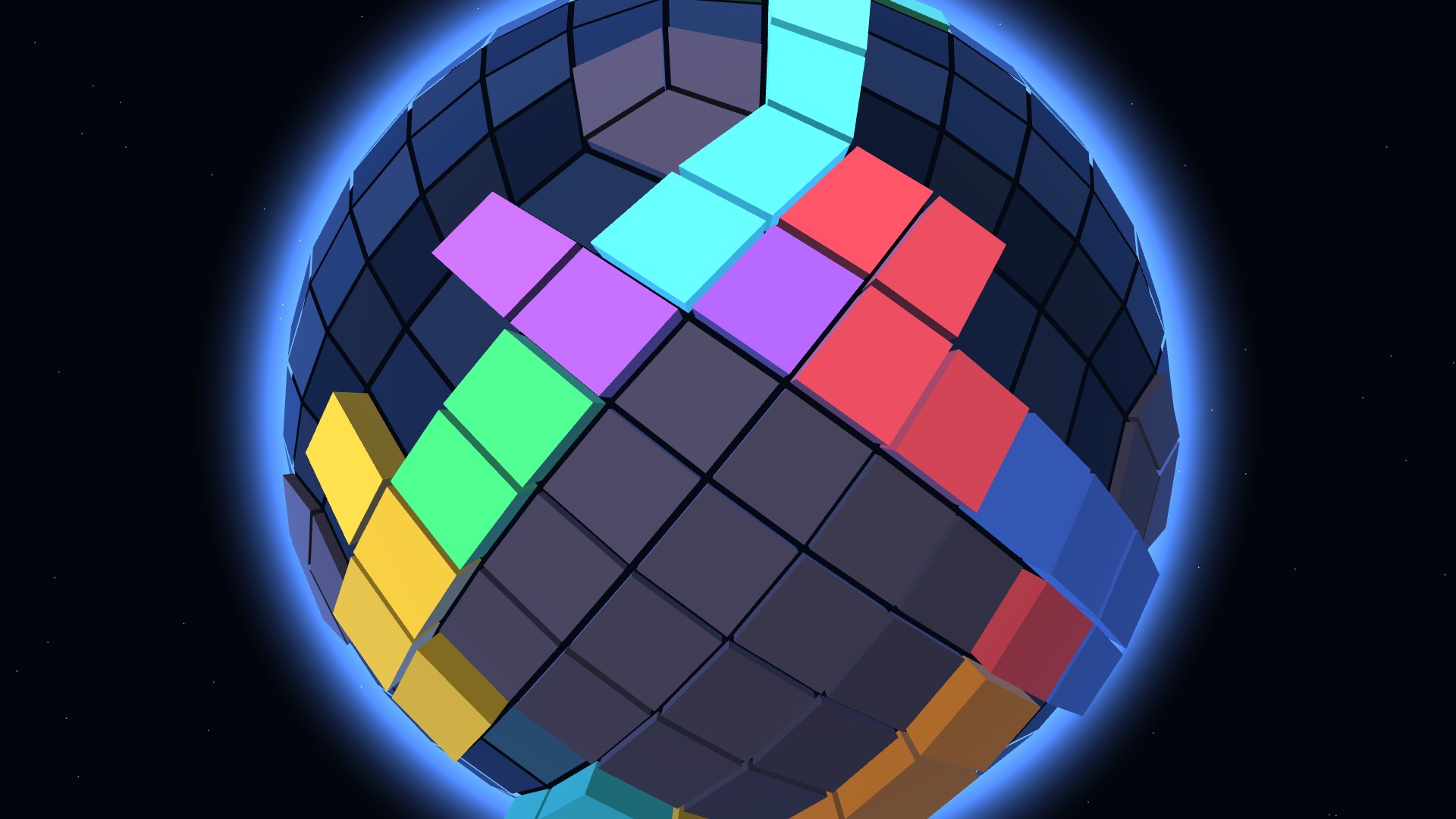
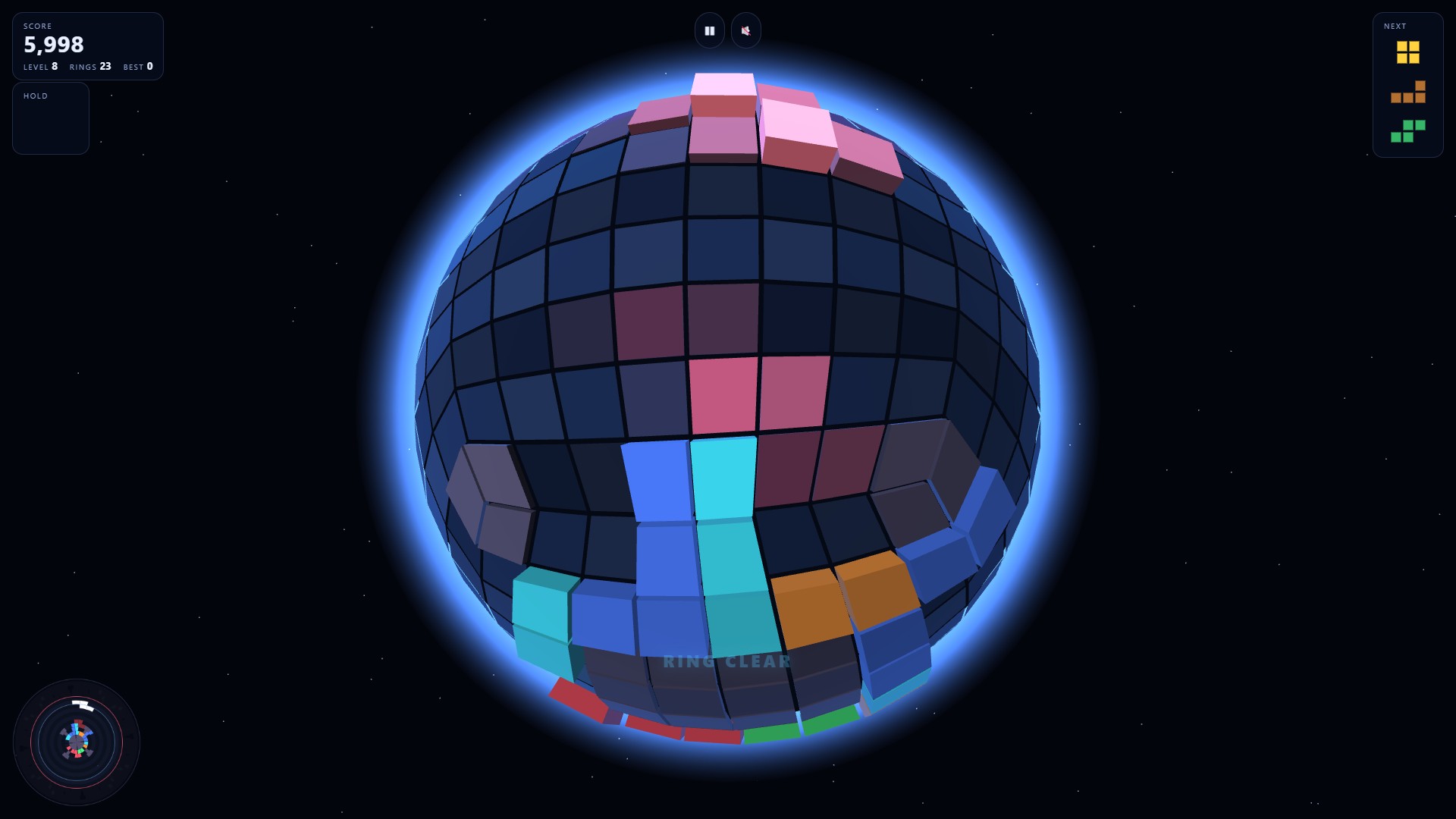
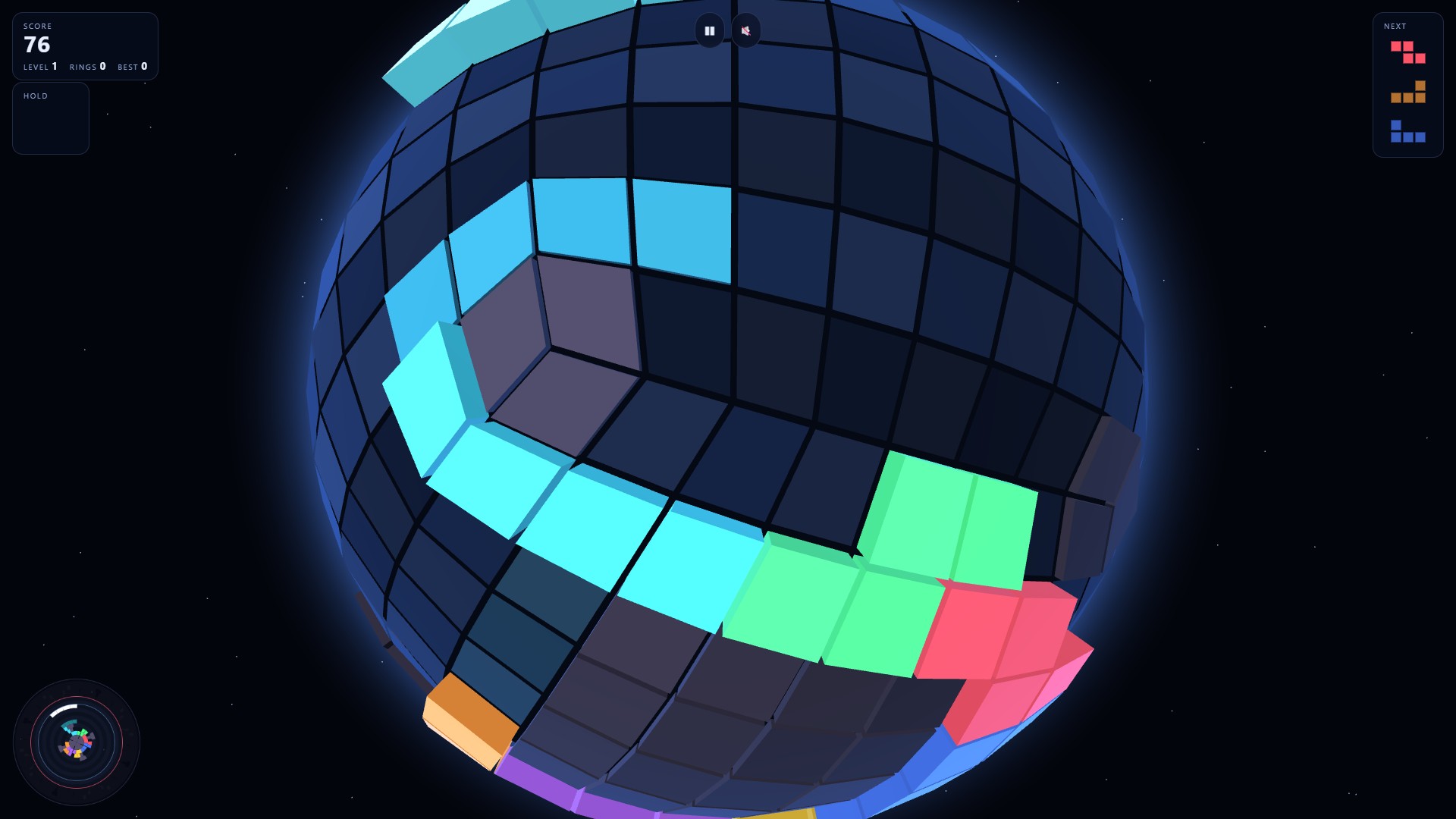
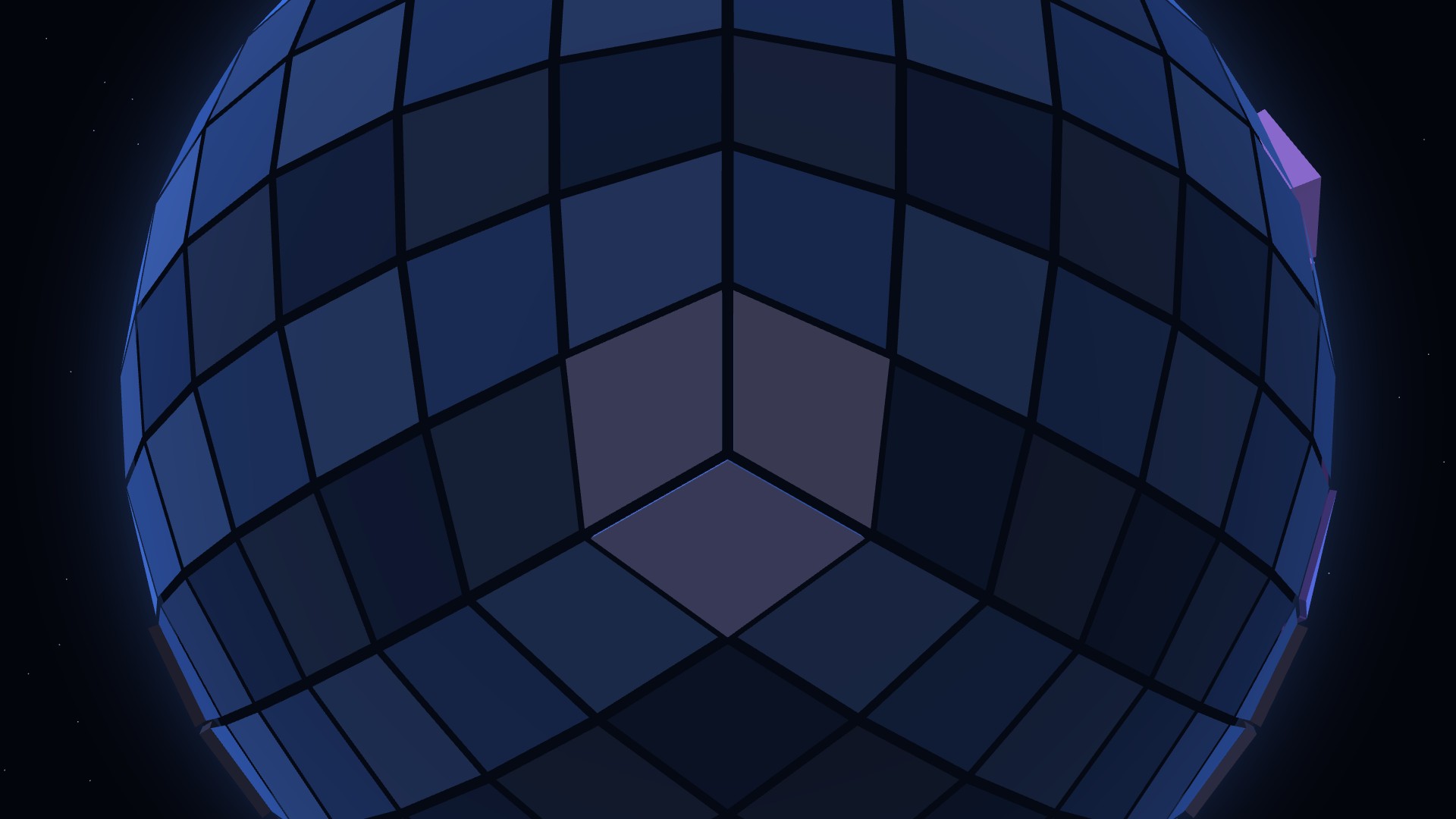
Gravira is a falling-blocks puzzle played on the outside of a planet. You look down at its south pole; the blocks come in over the horizon and fall toward the middle. Your only move is to spin the whole world — there's no left or right, just the planet turning under the next piece.
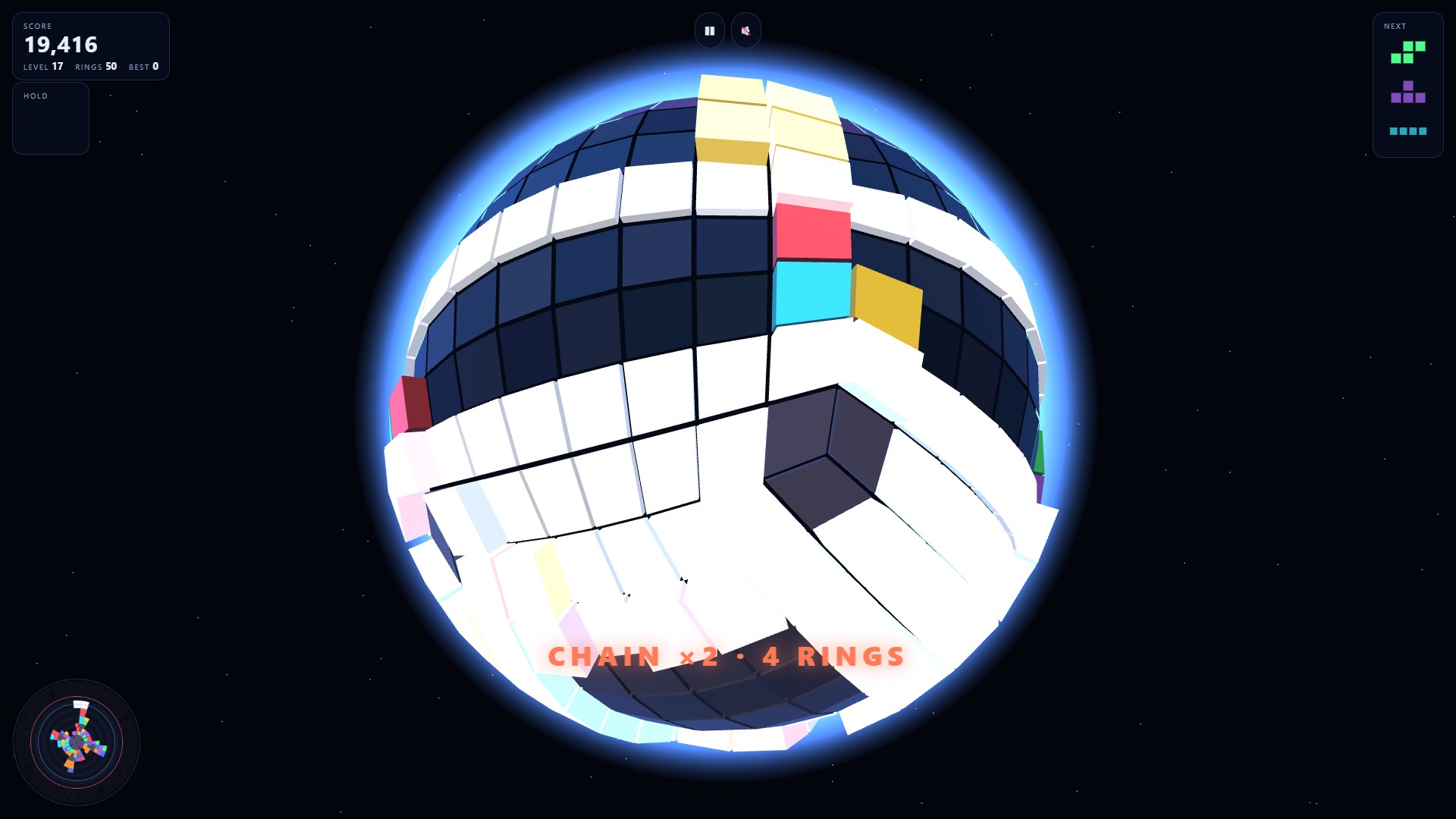
The pile grows outward from the pole in rings, like water filling a bowl. A complete ring around the pole clears, and when a clear drops blocks into another ring and completes it too, that's a chain — a bigger wave worth more.
The planet is a cube pushed out into a sphere: six faces, square cells, real 90° turns — but eight corners where three squares meet instead of four. Every one of them is capped with solid ground, so a piece can never lock hanging in mid-air over a gap that isn't there.
Free, installable, and playable fully offline after one visit — on desktop, phone, tablet or gamepad. The online Top 10 is checked honestly: the server replays your exact game against the same rules before it believes your score.
① Spin, don't slide
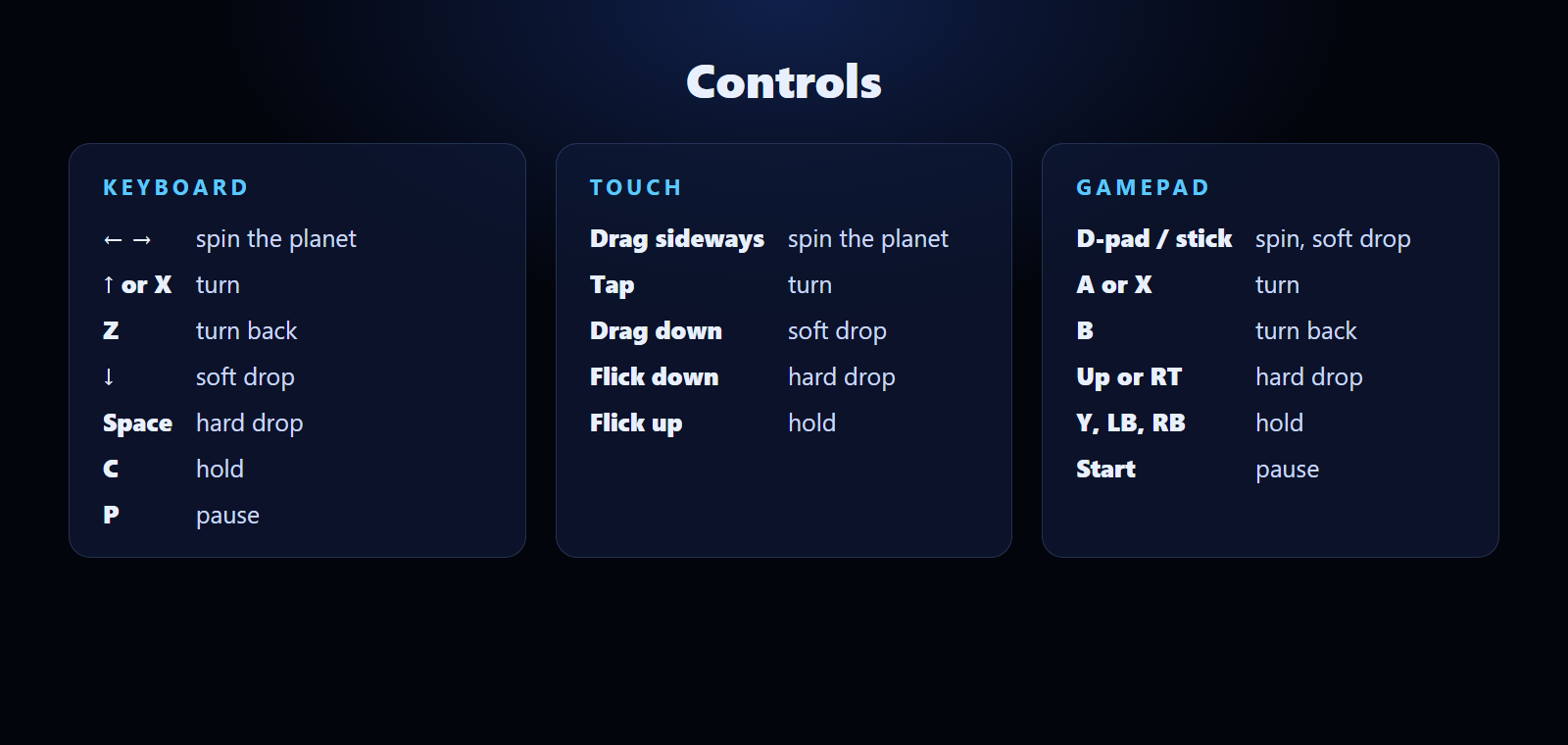
There's no sideways move — you turn the whole planet under a falling piece. The world only moves when you steer it; a new piece always spawns right where the last one landed.
② Rings, not rows
The planet splits into concentric rings around the pole. A full ring clears; a clear that fills another ring on the way down chains into a bigger wave.
③ A planet, not a grid
Six square faces wrapped onto a sphere, with eight corners where three faces meet. Those corners are capped solid, so the geometry's one true seam never becomes a trap.
④ A Top 10 that can't be faked
Every run is a recording of your actual inputs. Before a score reaches the board, the server replays it through the same rules and keeps its own score — not yours.
Two ways to play.
Classic planet
The default world: a 16-cell solid core, a ring of play above it, and a sky that ends the game if a piece can't spawn. The only mode that's ranked.
Custom size
Smaller planets are harder — less room to pile, bigger pieces relative to the ring. Not ranked; the board only tracks the standard size.
See it in motion.
Mouse and keyboard.
- Solo — one planet, one player, no online multiplayer yet
- Installable: adds to your home screen and plays fully offline after one visit
- A free one-file download plays from disk with no server at all
- No account, no ads, no cookies — your best score saves on your device
- Works on desktop, phone, tablet and gamepad
- The online Top 10 checks every run against the real rules before it counts
What we learned.
Eight corners, and 2.5% of pieces had nowhere to land
The planet's one geometric flaw, eight corners where three squares meet instead of four, turned into pieces freezing in mid-air over gaps that didn't exist. The fix cost the hardest difficulty a third of its survival time. We measured that cost before deciding it was worth paying.
A piece that had already landed kept sliding. The report came back within the hour.
Fixing one bug can write another. The first attempt at the corner fix quietly broke a much more basic promise, that where you land is where you stay, and a test suite that only checked whether a piece was supported never once asked whether it moved after it didn't need to.
The browser can say anything happened. We only believe our own replay.
A browser-side Top 10 is one line of code and completely worthless, nothing stops a client from just claiming a bigger number. The fix here isn't a smarter check. It's not trusting the browser's score at all.
We built a planet out of a cube, and it only has eight problems
An icosphere looked like the obvious shape for a planet. It fell apart the moment real pieces had to land on it. A cube wrapped onto a sphere turned out to have exactly eight weak points — and all eight were fixable.